Notebook Doodles That Mapped Adversary Patterns Across Pioneering Personal Computing Entertainment
Written by Klara Albrecht · Oct 10, 2026
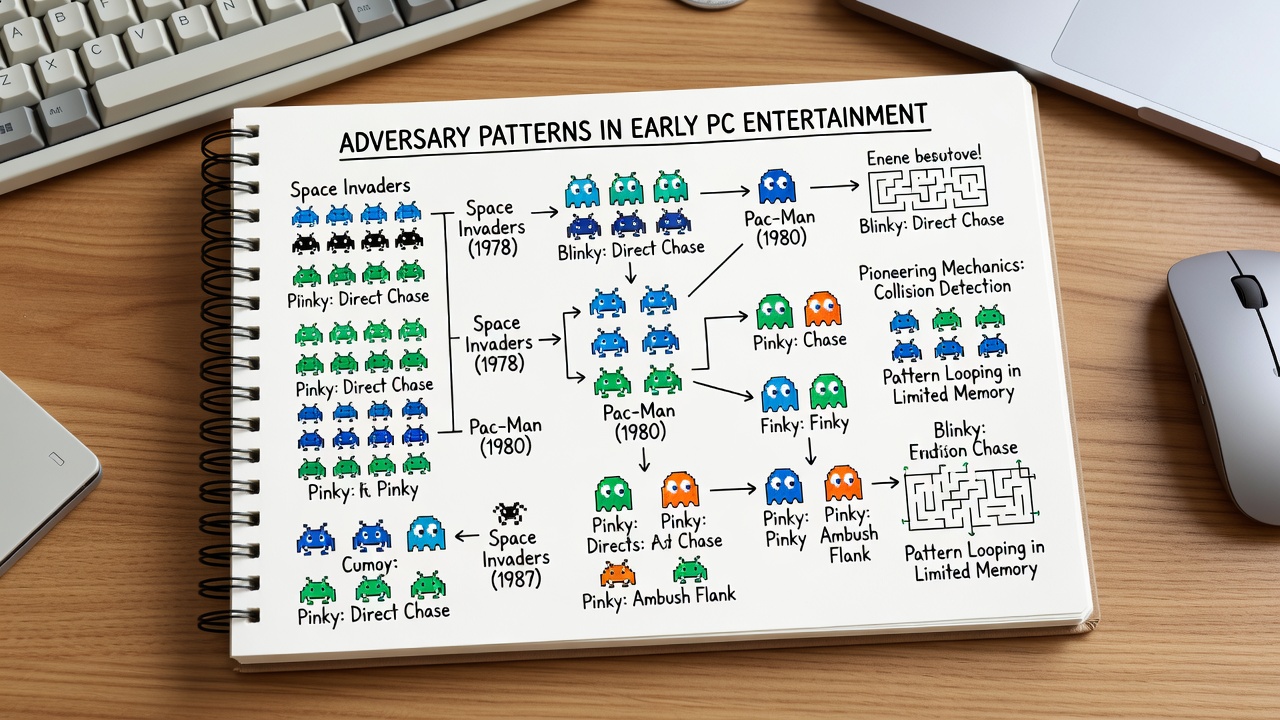
Notebook Doodles That Mapped Adversary Patterns Across Pioneering Personal Computing Entertainment
Players in the late 1970s and 1980s documented enemy behaviors in early personal computing titles through hand-drawn diagrams that tracked movement cycles, firing rates, and positioning sequences across titles running on systems like the ZX Spectrum, Commodore 64, and BBC Micro, and these sketches formed a practical archive that guided repeated play sessions while revealing algorithmic consistencies in adversary routines.
Data from preserved collections indicates that such notations appeared frequently in school exercise books and loose-leaf pads where users recorded frame-by-frame observations of sprite paths, and one collection held by regional computing history groups shows repeated use of grid overlays to plot coordinates for games featuring descending formations or patrolling units.
Origins in Home Microcomputer Play
Early adopters adapted graph paper techniques from mathematics lessons to capture patterns in titles that featured predictable yet challenging opponent logic, and researchers have traced examples back to 1982 when ports of arcade mechanics reached domestic hardware with limited processing cycles that produced repeating sequences rather than randomized actions.
Community newsletters from that period list contributions of annotated pages where individuals marked entry points, retreat triggers, and collision zones, while figures from archived user groups in North America and Europe reveal that these diagrams often incorporated color coding to distinguish between projectile types and movement phases.
According to records maintained by the Computer History Museum in California, similar practices extended to strategy elements in simulation-style releases where players charted unit behaviors over multiple turns, and this approach allowed systematic testing of defensive positioning without reliance on trial-and-error alone.
Techniques for Pattern Documentation
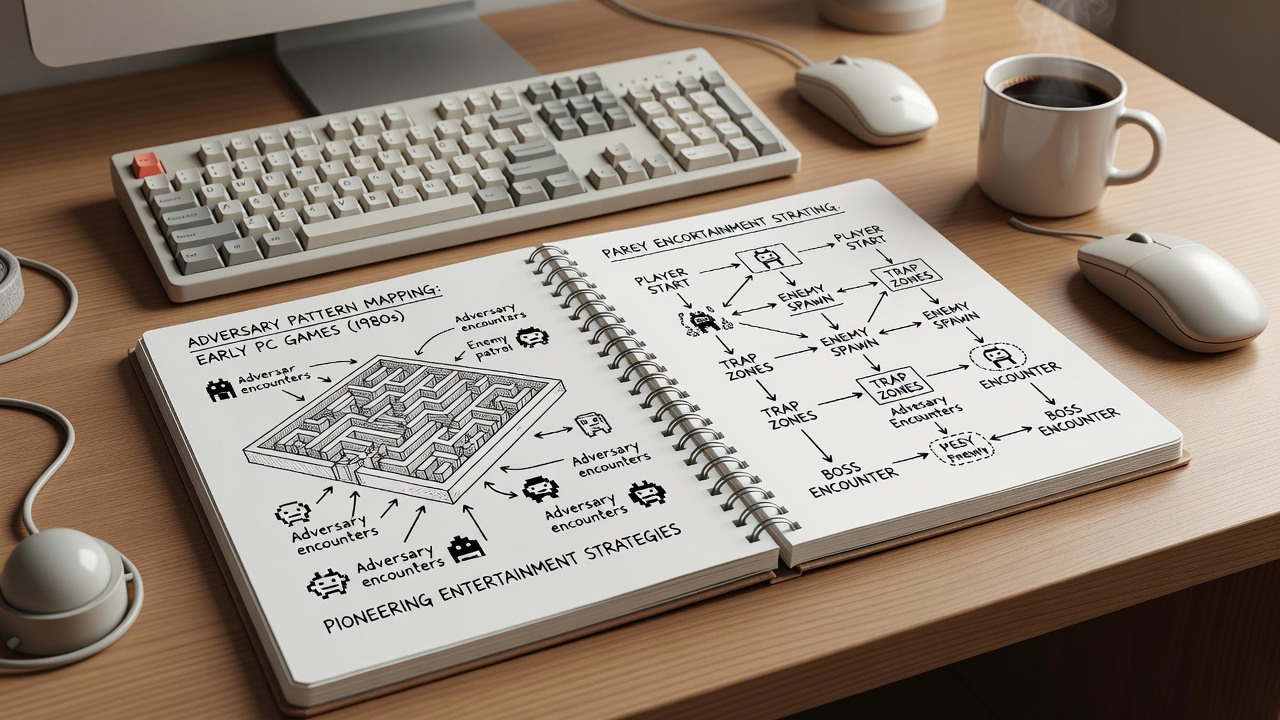
Users combined simple line drawings with numerical annotations that recorded cycle lengths and response delays, and these methods proved effective because many early programs operated on deterministic loops tied to processor clocks rather than variable inputs.
Observers have noted that sketches frequently included marginal notes on hardware-specific quirks such as interrupt timing or memory constraints that influenced sprite updates, and one set of diagrams from Australian home computing clubs demonstrates how players cross-referenced joystick response curves with visual enemy paths to optimize timing windows.
Evidence from preserved materials shows the integration of shorthand symbols for actions like dive-bomb sequences or flanking maneuvers, and this shorthand reduced page space while preserving essential data that could be referenced during active sessions.
Community Sharing and Collective Mapping
Local gatherings compiled individual sketches into larger reference sheets that circulated through tape trading networks, and these compilations extended the reach of isolated observations by aggregating data across multiple hardware configurations and software versions.
Studies conducted by researchers at the University of Melbourne have examined how such shared diagrams influenced group strategies in adventure and action hybrids, while parallel findings from Canadian archives highlight the role of margin annotations that flagged exceptions to standard patterns caused by memory overflows or loading variations.
By the mid-1980s, fanzine roundups began reproducing simplified versions of these doodles alongside code listings, and this practice created a feedback loop where new players refined earlier mappings with additional test cases.
Archival Preservation and Contemporary Access
Institutions have digitized select examples as part of broader efforts to document informal knowledge production in early digital entertainment, and access initiatives launched around October 2026 continue to surface previously private collections through public exhibitions and online repositories.
These materials provide primary sources for understanding how non-professional analysts contributed to the documentation of algorithmic behaviors before formal game design literature emerged, and links between individual notations and published strategy guides appear in several regional histories.
Further examination of the artifacts shows consistent use of coordinate systems adapted from school mathematics curricula, and this adaptation illustrates the transfer of analog recording methods into computational contexts where visual feedback remained the primary diagnostic tool.
Conclusion
Notebook-based mapping of adversary patterns represents a documented layer of player engagement with foundational personal computing entertainment that relied on direct observation and iterative recording, and the resulting diagrams supplied functional knowledge that supported extended engagement across constrained hardware environments.
Preserved examples continue to inform historical analyses of how communities adapted available tools to decode deterministic systems, while ongoing digitization projects ensure these artifacts remain available for study without requiring physical access to original volumes.