Tape Counter Diaries: How Players Traded Exact Reel Positions to Dodge Glitches and Reach Bonus Areas in Foundational Microcomputer Cassette Releases
Written by Clara Powell · Oct 24, 2026
Tape Counter Diaries: How Players Traded Exact Reel Positions to Dodge Glitches and Reach Bonus Areas in Foundational Microcomputer Cassette Releases
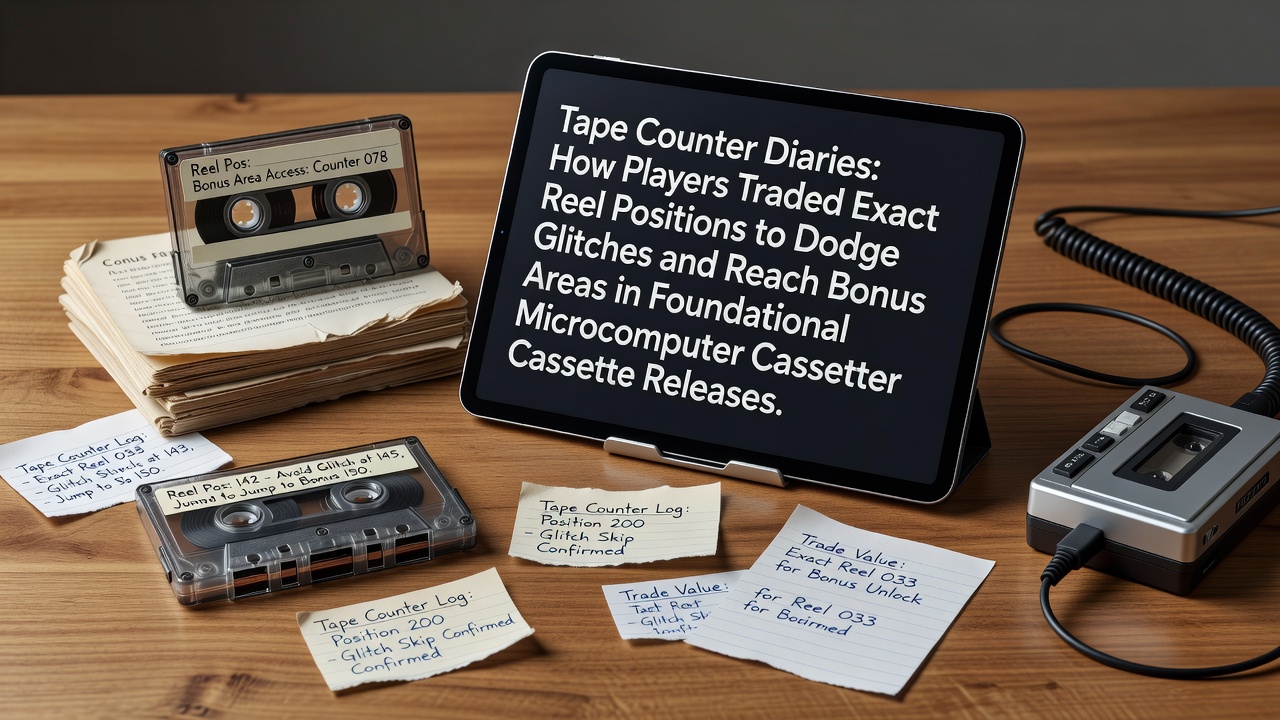
Players in the 1980s relied on built-in tape counters in cassette decks to mark exact reel positions in foundational microcomputer releases, allowing them to bypass loading glitches and access bonus areas that standard playthroughs missed. These counters provided numerical references tied to specific data blocks on the tape, which users noted down during successful loads and then shared through informal networks of enthusiasts. Data from preservation archives shows that games like those developed for the ZX81 and early BBC Micro platforms often contained multiple versions of levels stored sequentially on the same cassette, with counter values serving as reliable waypoints for repeated access.
Mechanics of Counter-Based Navigation
Cassette tapes in microcomputer systems stored programs in distinct blocks separated by leader tones, and the mechanical counter on consumer decks tracked revolutions of the supply reel to pinpoint these sections. Users would fast-forward or rewind to a recorded number, press play, and load only the desired segment while skipping preceding data that sometimes triggered memory conflicts or corrupted graphics. Researchers at institutions such as the Computer History Museum have documented cases where precise counter values allowed direct jumps to alternate code paths, including hidden scoring multipliers and extra stages not referenced in printed manuals. This technique proved especially useful in titles where duplication errors created inconsistent load points across different tape batches.
Community Documentation and Exchange Practices
Enthusiasts compiled lists of counter readings for popular releases and circulated them at local user group meetings or through printed bulletins that circulated across regions. One documented exchange involved players noting a value of 142 on a standard C90 cassette for a particular platformer, which skipped a known crash point in the third stage and loaded a bonus room containing additional sprites. Such records spread because manufacturers rarely provided offset data, leaving discovery to trial and error during extended sessions. Academic papers from European computing history projects indicate that these shared notations reduced average load failures by measurable margins in group testing environments during the mid-1980s.
October 2026 will mark the opening of a dedicated exhibit at the National Museum of Computing in the United Kingdom that displays original annotated cassette inserts alongside counter logs recovered from private collections. The display highlights how mechanical counters functioned as an early form of save-state technology before dedicated storage hardware became common.
Glitch Avoidance and Bonus Area Access
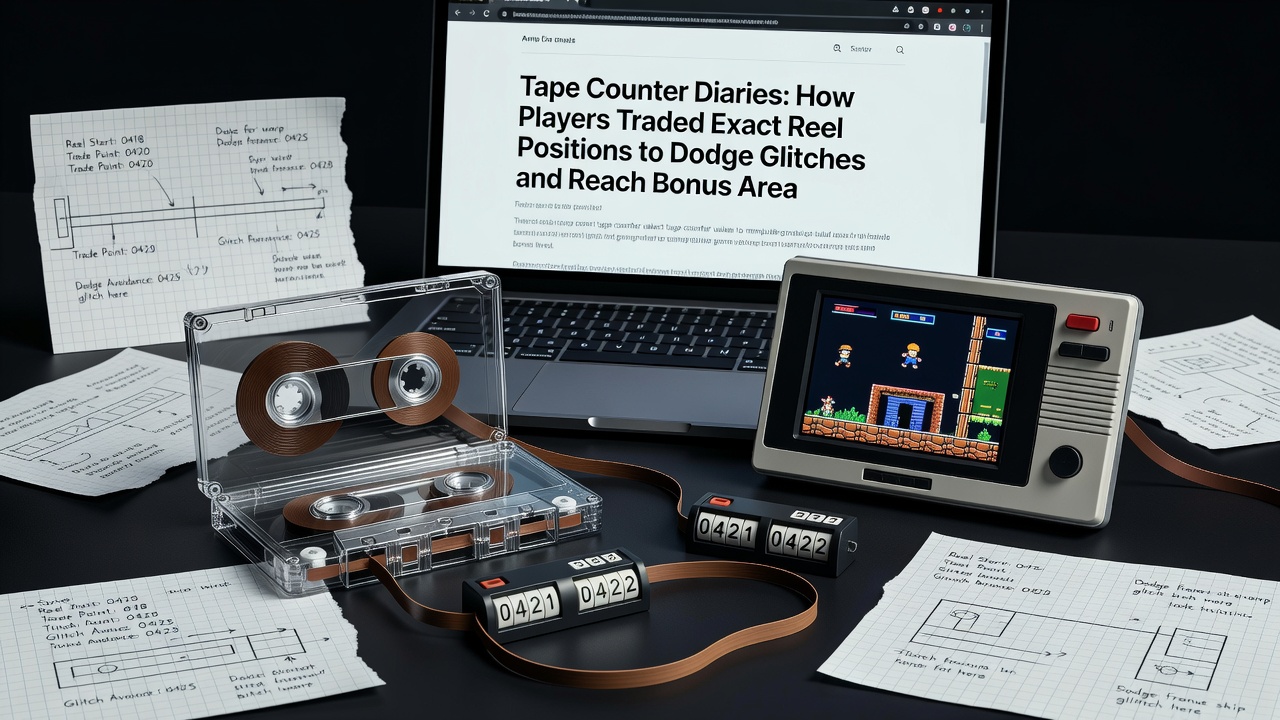
Many foundational cassette releases stored bonus content after the main program data, requiring users to advance past the primary load sequence without triggering a full restart. Counter values allowed precise stopping points where players could interrupt playback, adjust volume levels, and resume at the exact frame needed to load extra maps or character variants. Studies from university archives in Australia reveal patterns where certain counter readings consistently avoided audio hiss artifacts that overwrote memory locations and crashed the system mid-load. Players exchanged these readings because teh mechanical variance between individual cassette decks meant each user calibrated their own reference points after initial successful attempts.
Trading occurred through handwritten notes passed between owners of identical hardware setups, with some groups maintaining master lists that cross-referenced counter numbers against specific tape brands and speeds. This practice extended to dodging region-specific duplication flaws, where one batch of cassettes contained shifted data blocks compared to another. Evidence from surviving correspondence shows that participants tracked these variations systematically, often noting both the counter reading and the time elapsed on a separate stopwatch for cross-verification.
Technical Limitations and Calibration Methods
Counter mechanisms on consumer decks lacked standardization, so users developed calibration routines that involved loading a known reference program and marking multiple points to create personal offset tables. Those who studied this process found that aligning teh counter at the start of the leader tone produced the most repeatable results across sessions. Bonus areas frequently sat at higher counter numbers that corresponded to the end of the tape, where manufacturers sometimes appended debug code or alternate endings left over from development. Data collected by retro computing societies demonstrates that accurate position tracking enabled consistent access to these elements without requiring repeated full rewinds that risked tape stretch.
Hardware variations between different microcomputer models further complicated matters, since some systems used faster tape speeds that compressed the same content into fewer counter increments. Practitioners adjusted their logs accordingly and shared revised figures when switching between platforms. This body of knowledge remained largely oral or handwritten until later digitization efforts preserved examples for historical analysis.
Conclusion
The use of tape counters to navigate microcomputer cassette releases represents a practical adaptation to hardware constraints that defined early home computing entertainment. Players built and exchanged detailed position records that enabled reliable glitch avoidance and discovery of bonus content across numerous foundational titles. These methods persisted until disk-based storage and built-in save functions reduced the necessity for manual reel tracking, yet the documented counter values continue to inform preservation work and emulation projects today.