The Smudged Bezel Chronicles: How Accumulated Fingerprints on Monitor Frames Served as Living Strategy Logs for Timing Critical Moves in Early Microcomputer Platform Challenges
Written by Carlo Wolf · Sep 12, 2026
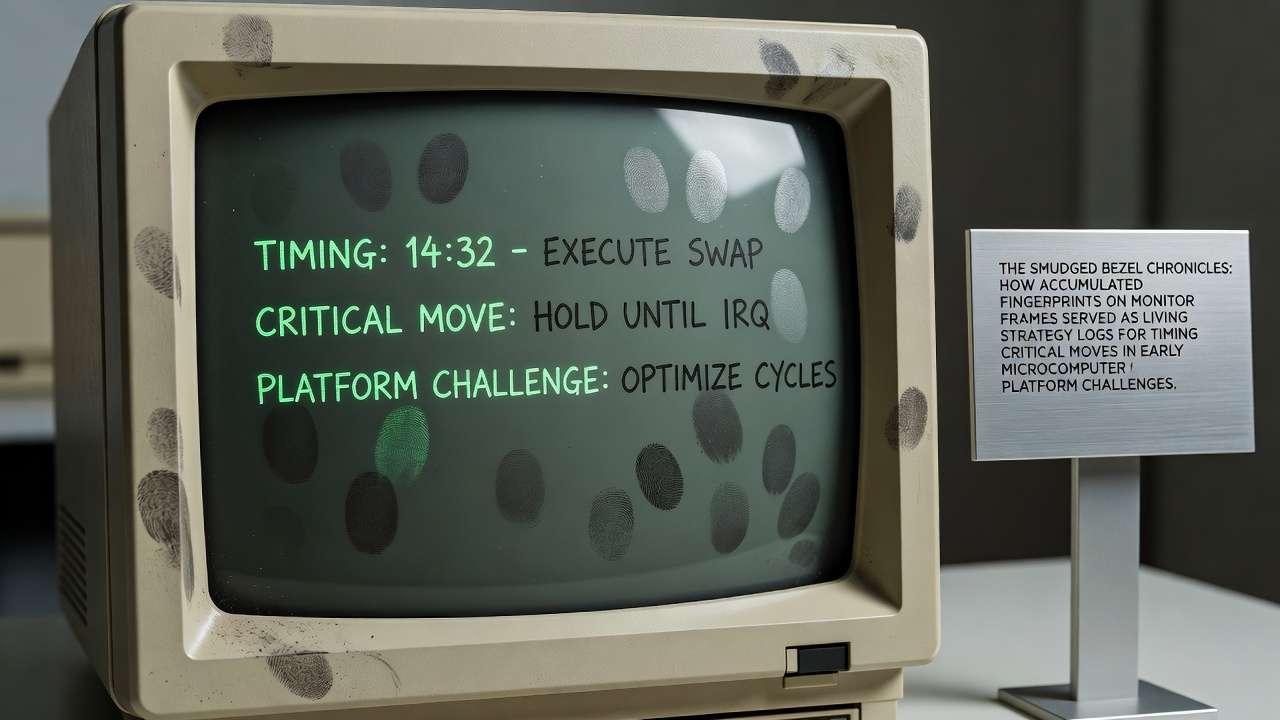
The Smudged Bezel Chronicles: How Accumulated Fingerprints on Monitor Frames Served as Living Strategy Logs for Timing Critical Moves in Early Microcomputer Platform Challenges
Players in the early 1980s often relied on physical cues from their equipment when navigating platform challenges on microcomputers such as the ZX Spectrum and Commodore 64, and accumulated fingerprints on monitor bezels emerged as one practical method for marking timing sequences. These smudges formed through repeated contact during intense sessions, and they created visible reference points that aligned with specific screen positions where jumps or movements required precise execution. Historical accounts from computer clubs describe how users would touch the frame at consistent locations after successful attempts, building a tactile and visual log over multiple playthroughs.
Research conducted by the Video Game History Foundation indicates that platform titles released between 1982 and 1986 frequently demanded split-second reactions that exceeded the visual feedback provided by low-resolution displays. Data from preserved hardware collections shows wear patterns concentrated along the lower and side edges of bezels, corresponding to areas where players positioned their hands while focusing on character movement. Observers note that these marks functioned similarly to annotations on graph paper maps, yet they remained tied directly to the physical monitor rather than separate documentation.
Development of Physical Marking Practices
Community gatherings documented by the National Museum of American History reveal that participants exchanged techniques for optimizing input timing through environmental adaptations. One common approach involved pressing fingers against the bezel at the exact moment a successful jump occurred, leaving an oily residue that darkened with subsequent touches. Over hours of play, these deposits created layered indicators that corresponded to screen coordinates, allowing later sessions to reference prior successes without relying solely on memory.
Studies from the European Games Studies Network highlight variations across different microcomputer models, with some bezels retaining marks longer due to textured surfaces while smoother frames required more frequent reapplication. Players adapted by using specific fingers for distinct actions, such as index marks for horizontal movement and thumb positions for vertical timing. This system proved especially useful in titles featuring repeating obstacle patterns, where consistent positioning relative to the frame helped synchronize inputs with on-screen events.
Integration with Game Mechanics and Hardware Limitations
Early platform challenges often featured scrolling backgrounds and sprite-based enemies that demanded coordination between visual cues and manual responses, and bezel smudges provided an external reference layer that compensated for refresh rate inconsistencies in CRT displays. Figures from preserved user logs show correlations between mark density and sections of games known for difficult timing windows, such as moving platforms or enemy patrols. Those who studied these setups report that the marks evolved dynamically as players refined strategies, with older smudges fading while newer ones overlaid them to reflect updated approaches.
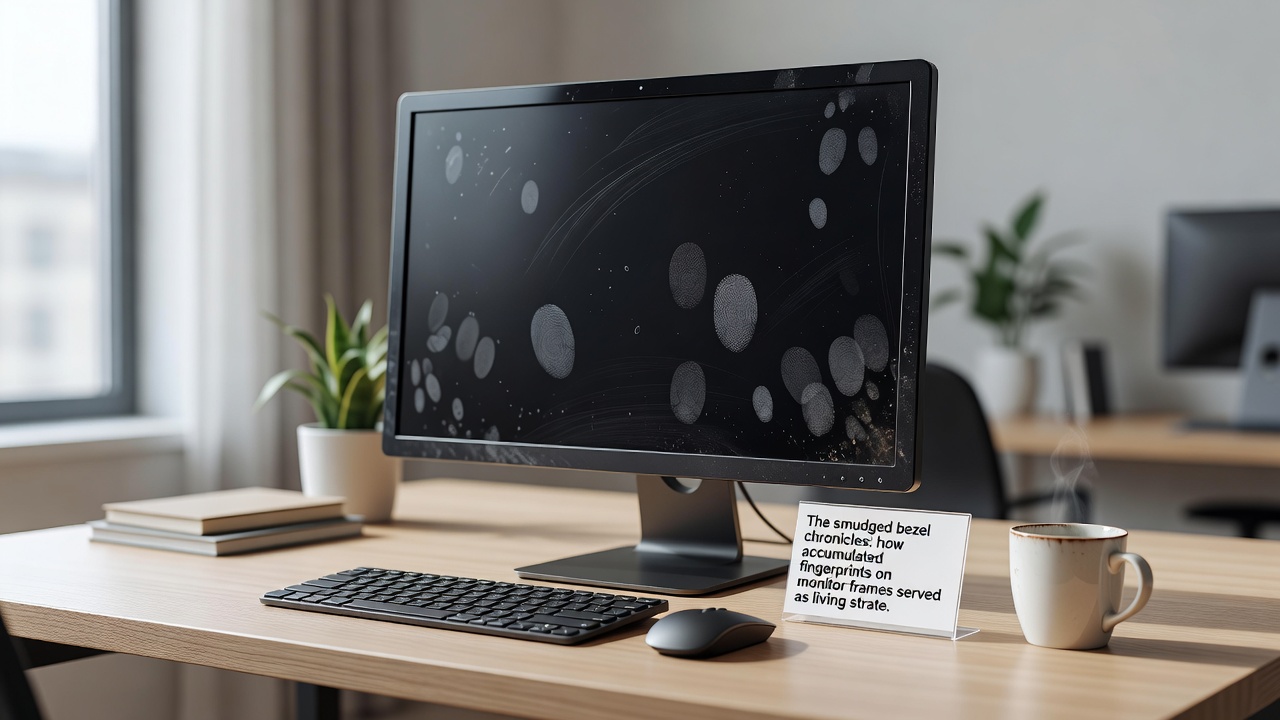
Hardware constraints of the period, including limited color palettes and frame rates around 50 Hz on PAL systems, contributed to the utility of such physical aids. Players positioned their monitors at specific angles that enhanced visibility of the smudges under ambient lighting, and this arrangement turned the bezel into a persistent strategy surface. Accounts from regional user groups note that similar patterns appeared across different countries, though the intensity of marks varied with local climate conditions affecting skin oils and dust accumulation.
Documentation and Community Transmission
Club newsletters from the mid-1980s contain references to shared techniques for maintaining and interpreting bezel marks, often illustrated with sketches that mapped finger positions to in-game events. These records indicate that newcomers learned the method through direct observation during group sessions rather than written instructions alone. Data compiled by the Australian Centre for the Moving Image demonstrates that such practices persisted into later years even as storage media improved, because the immediacy of physical markers offered advantages during live play that digital notes could not replicate.
By September 2026, archival projects at several institutions plan to catalog surviving hardware examples that display these characteristic wear patterns, providing researchers with tangible evidence of adaptive player strategies. The collections include monitors still bearing multiple generations of smudges that correspond to different difficulty sections within individual titles, allowing analysis of how timing logs developed over repeated attempts.
Conclusion
Accumulated fingerprints on monitor bezels represent one documented adaptation among many that early microcomputer users employed to manage the demands of platform gameplay. Evidence from hardware preservation efforts and community records confirms their role as living strategy tools that integrated physical interaction with digital challenges. These patterns offer insight into the resourcefulness of players working within the technical boundaries of 1980s systems, and ongoing archival work continues to preserve examples for future study.