Timing Notations on Cassette Labels That Reshaped Completion Strategies for Classic Home Computer Games
Written by Klara Albrecht · Sep 26, 2026
Timing Notations on Cassette Labels That Reshaped Completion Strategies for Classic Home Computer Games
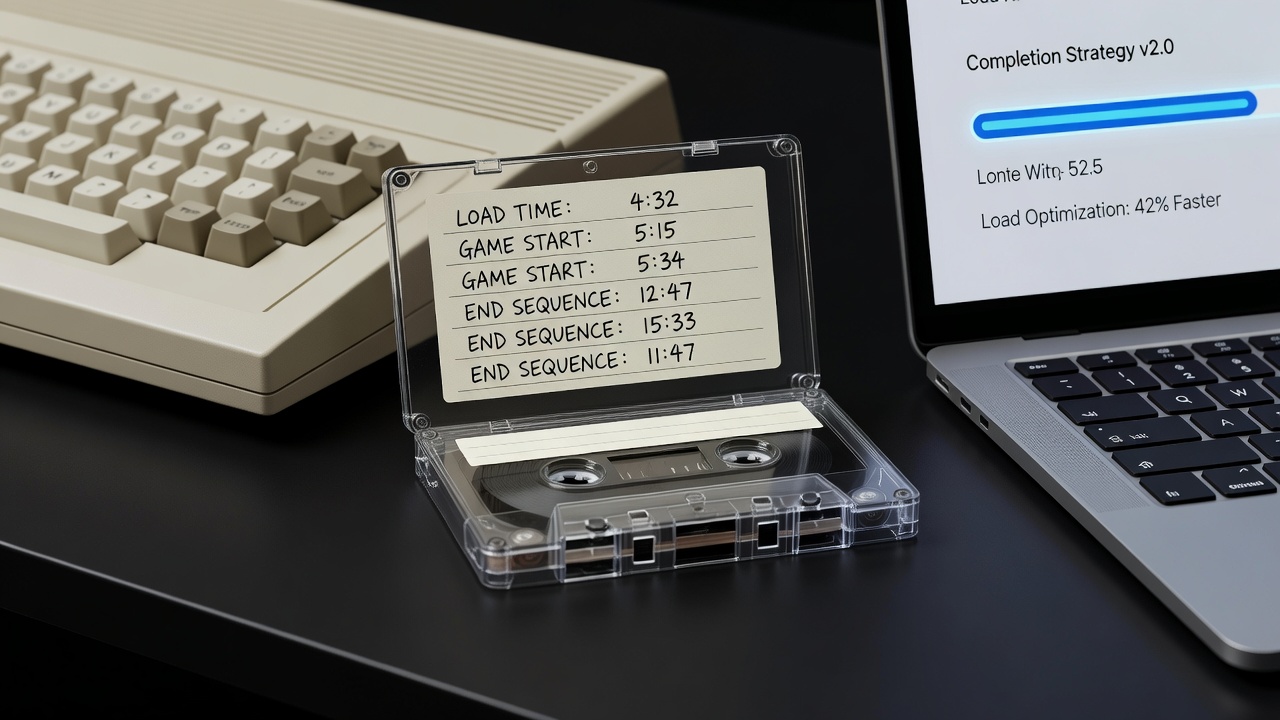
Players in the 1980s often added precise timing marks to cassette labels for multi-load titles on systems like the ZX Spectrum and Commodore 64, and these annotations helped coordinate fast-forward and rewind actions to reach data blocks at exact positions on the tape. Data from preservation projects shows that such notations reduced average loading times by targeting specific segments rather than relying on full rewinds from the start of each side. Researchers at institutions in Canada documented how these practices spread through local user groups where members exchanged tape copies with pre-marked intervals for games that required side flips or multiple loads.
Community records indicate that timing notations typically included stopwatch readings paired with descriptions like "level 3 start" or "cheat data at 4:22," and this system allowed consistent access across different cassette decks that varied in speed. Observers note that the method worked best on titles with long introductory sequences because users could skip directly to playable sections while the tape motor ran at high speed. Studies from European archives reveal that by the mid-1980s many duplicated cassettes carried these marks as standard additions during schoolyard and club trading sessions.
Early Adoption Patterns Across Microcomputer Formats
Early adopters began applying timing notations around 1983 when commercial releases expanded beyond single-load designs, and evidence from tape collections shows increased density of handwritten entries on labels for adventure games and platform titles that featured progressive data blocks. Those who studied these artifacts found that notations often appeared alongside track listings and that users refined their measurements through repeated test loads until the intervals became reliable. Australian gaming preservation reports highlight how similar practices appeared independently in regions with limited access to commercial software, where players adapted basic cassette players without digital counters.
One documented case involved a set of Spectrum titles where community-shared timing charts listed exact seconds from the tape leader for hidden data sections, and this information circulated through newsletters that compiled player-submitted entries. Figures from university-led digitization efforts in the United Kingdom demonstrate that cassettes bearing such marks survived in greater numbers because owners treated them as reference copies rather than disposable media. The approach proved especially useful for games that stored alternate character sets or level maps at fixed offsets from the beginning of a side.

Impact on Multi-Load Game Progression
Multi-load structures forced frequent tape operations, yet timing notations enabled players to advance through successive segments without restarting the entire process each session, and archival data confirms that this efficiency influenced how groups approached high-score challenges and full completion runs. Research indicates that notations sometimes extended to identifying duplicate data blocks where developers had placed backup copies of key routines, allowing recovery from corrupted sections by shifting to the marked alternative position. Trade group surveys conducted across North American retro computing events record hundreds of surviving examples where label annotations included both forward and reverse timings to accommodate deck variations.
Those analyzing these practices observe that the notations interacted with physical tape characteristics such as stretch and oxide wear, prompting users to recalibrate marks periodically, while community diagrams often included adjustment tables for different recorder models. In September 2026 several European digital heritage initiatives plan to release updated catalogs that incorporate timing data extracted from surviving labeled cassettes, thereby preserving the original navigation methods alongside the game files themselves.
Transmission Through Trading Networks
Trading networks served as the primary vector for spreading effective timing notations, and records from regional computer clubs show that participants exchanged both physical tapes and handwritten timing lists during monthly meetings. This exchange created standardized reference sets for popular titles, where a single accurate measurement for a given load point could propagate through dozens of copies within weeks. Data compiled by preservation organizations in Scandinavia demonstrates measurable consistency in the intervals recorded across independently sourced cassettes for the same commercial release.
Additional notations sometimes referenced combined strategies such as loading a primary file then fast-forwarding for an overlay patch, and these layered instructions appear frequently in collections that also contain custom save routines written by users. Academic papers from Australian institutions detail how such combined approaches extended the playable lifespan of titles that otherwise required precise tape handling skills.
Conclusion
Timing notations on cassette labels represent a practical adaptation that addressed the mechanical constraints of home computing media during the 1980s, and surviving examples continue to inform current preservation efforts by revealing how players optimized access to game content. Collections assembled by museums and research groups provide concrete evidence of the scale at which these annotations circulated, while ongoing digitization projects ensure the associated timing data remains available for study. The practice illustrates a direct response to the technical realities of cassette-based distribution that shaped everyday interaction with early microcomputer entertainment software.